
Micro Shaker Kitchens: Country, Modern & Transitional Looks in 2026
There's a reason the Micro Shaker door has become the design story of the moment. It takes a shape everyone already trusts, the classic recessed-panel Shaker, and reduces it to its essentials: narrower rails, tighter stiles, a lighter footprint on the eye. The result sits in a rare sweet spot. It's traditional enough to feel timeless, restrained enough to feel modern, and flexible enough to move fluidly between country, contemporary and transitional schemes without ever looking like it's trying too hard.
It keeps the in-frame character of a traditional door but pares the profile right back, giving it a linear, deliberately understated presence. That's exactly why it's proving so versatile for homeowners who don't want to commit to one single "look" and instead want a kitchen that can lean country one day and pared-back modern the next, depending on how it's dressed.
Below, we've pulled together expert-level guidance on how to actually achieve that: not just why the micro Shaker works, but how to build a full country, modern or transitional scheme around it, room by room, decision by decision.
Why the Micro Shaker Door is the Right Starting Point for your kitchen
A standard Shaker door carries a fairly wide frame, generally somewhere around 2.5 to 3 inches, which is part of what gives traditional and country kitchens their cosy, furniture-like weight. A micro or "skinny" Shaker door narrows that frame dramatically, often down to somewhere between half an inch and an inch and a half. The panel and the recessed detailing stay, so the door still reads as unmistakably Shaker, but the lighter frame gives it a cleaner, more architectural presence.
That's the trick that makes it so adaptable. Because the bones are traditional but the proportions are modern, a micro Shaker kitchen can be pushed in almost any stylistic direction simply by changing the finish, the colour and the surrounding materials, without changing the cabinetry itself. It's why kitchen designers are increasingly treating it as a base layer for a look, rather than a look in itself.
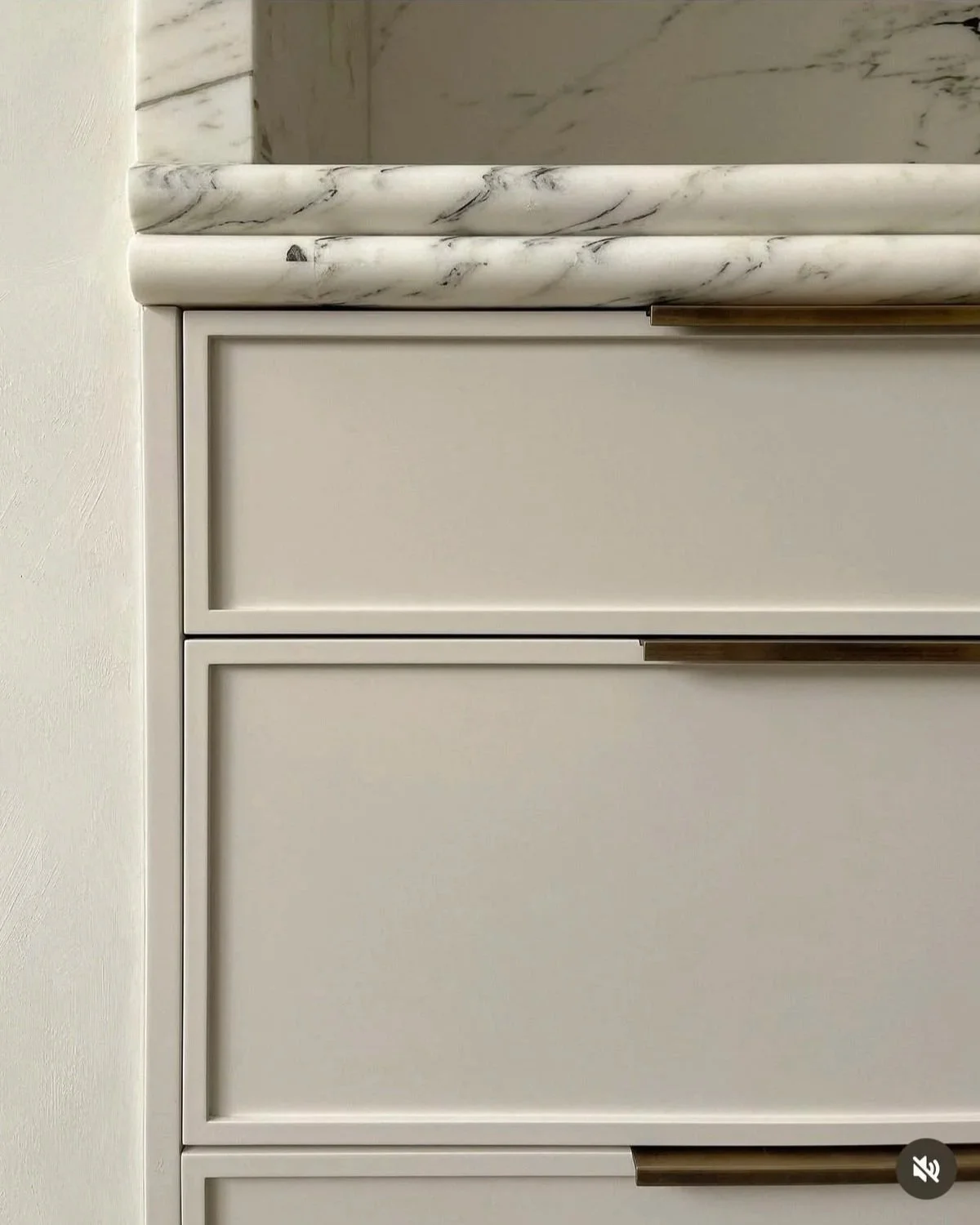
Achieving a Country Kitchen Look
Country doesn't have to mean heavy or fussy. The micro Shaker door lets you keep the soul of a country kitchen (natural materials, warmth, a lived-in quality) while avoiding the bulkier, more ornate detailing that can start to feel dated.
Cabinetry and worktops
Choose the micro Shaker in a soft-coat lacquer or a painted timber look finish rather than a stark solid colour, and pair it with an island or run of cabinetry in a contrasting timber tone. Solid wood or timber effect worktops (oak and walnut in particular) are doing a lot of work in country schemes right now, especially paired with a honed or fluted stone for wet zones like the sink run.
Colour palette
Country kitchens are moving away from the very saturated forest green and deep navy that defined the last few years, in favour of warmer, softer tones: putty, stone, mushroom, warm off-whites and gentle taupes. Where colour is used, it's showing up as a considered accent rather than an all-over statement, think a deep burgundy or plum island against warm neutral perimeter cabinetry, rather than colour everywhere at once.
Paint, wallpaper and tiles
Lean into texture over pattern. A limewash or chalky matt paint finish on the walls reads as authentically country without tipping into twee. Where wallpaper is used, botanical or subtle woven-look designs in muted tones work well above a run of open shelving or in a snug/breakfast nook off the main kitchen. For tiling, handmade or slightly irregular metro and brick-bond tiles in warm stone or clay tones give texture and imperfection, which is exactly what keeps a country scheme feeling authentic rather than showroom-perfect.
Flooring
Reclaimed or wide-plank oak boards remain the benchmark for country kitchens, ideally with visible grain and a light to mid-tone stain rather than anything too polished. Where wood isn't practical, a warm toned stone or terracotta effect porcelain tile achieves a similar grounded, natural feel while being far more forgiving day to day.
Appliance integration
The country look benefits from appliances that disappear rather than dominate. Integrated fridge-freezers and dishwashers behind panelled slim Shaker doors keep sightlines clean, while a single "hero" appliance, a range cooker in a warm, considered colour rather than gloss stainless steel, becomes the visual centrepiece the rest of the room is built around.
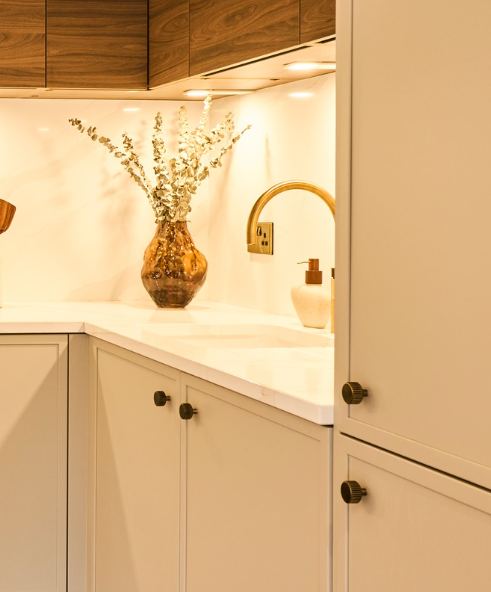
Achieving a Modern Kitchen Look
This is where the micro Shaker door earns its reputation as the biggest kitchen trend of the moment. Stripped of ornamentation and given a sharp, considered finish, it can look genuinely contemporary, more architectural than domestic.
Cabinetry and worktops
Keep the palette tight and the finishes matt. Gloss is firmly out; the direction of travel is towards flat, tactile lacquers and natural wood grain that reward closer inspection rather than shine from across the room. Worktops in large format sintered stone or a honed natural stone with minimal veining keep the look calm, and a flush, seamless cooktop that sits level with the worktop reinforces the sense of a room with nothing extraneous on show.
Colour palette
Modern schemes are softening. Cold, stark whites and cool greys are giving way to warmer neutrals with a gentle undertone, alongside earthy shades: warm taupe, mineral greys, soft greens and the occasional deep, moody colour used sparingly on an island or a bank of tall units. The aim is quiet contrast rather than the high-contrast black and white schemes that dominated a few years ago.
Paint, wallpaper and tiles
Modern kitchens are largely paint led rather than pattern led. A single, confident matt wall colour, or a colour drenched scheme where walls, trim and even ceiling share one tone, creates a cocooning, considered feel. Where tiling appears, it tends to be large format and minimal grout, in stone or concrete-look finishes that continue the worktop material up the wall rather than introducing a separate pattern.
Flooring
Large format porcelain or polished concrete effect flooring, laid with minimal grout lines, supports the architectural feel. Where timber is used, it's typically a wider board in a lighter, more neutral stain than the warmer tones favoured in country schemes.
Appliance integration
This is central to the modern look. Full-height integrated columns for fridge, freezer and ovens, concealed extraction, and pocket or hidden doors that let you close off a working larder, utility space or coffee station entirely have become one of the defining features of the "invisible kitchen." The goal is a room that reads as calm and uncluttered even when it's in full use, with the working elements revealed only when needed.
Achieving a Transitional Kitchen Look
Transitional is, in many ways, the natural home for the micro Shaker door, since it's built to bridge exactly this gap. The goal here is a kitchen that feels collected rather than themed: traditional detailing softened by contemporary restraint.
Cabinetry and worktops
Mix it up deliberately rather than accidentally. A painted slim Shaker perimeter in a warm neutral, paired with an island in a contrasting natural wood or a deeper accent colour, is one of the most reliable transitional formulas going. Worktops that combine a honed stone on the island with a warm timber run elsewhere reinforce that sense of considered contrast without competing.
Colour palette
This is where the "family of blues" and softened greens that are dominating 2026 colour forecasts tend to land best: not stark navy, but warmer, ink-toned blues; not bright forest green, but a muted sage or olive. Pair with warm off-whites rather than cool ones, so the overall effect feels grounded rather than clinical.
Paint, wallpaper and tiles
Transitional schemes can take a bit more risk with pattern than modern ones, without tipping into full country. A subtle geometric or botanical wallpaper on a single wall, a fluted or reeded tile as a splashback detail, or a mix of a plain field tile with a decorative border all sit comfortably here. Keep the palette to two or three tones so the mix reads as curated rather than busy.
Flooring
Mid-tone engineered or solid oak, laid in a herringbone or chevron pattern, is doing a lot of heavy lifting in transitional schemes right now. It has enough texture and warmth to nod to tradition, while the geometry of the lay keeps it feeling current.
Appliance integration
Transitional kitchens tend to blend visible and hidden appliances rather than committing fully to either. A characterful range cooker or a statement hob might sit proudly on display, while everyday appliances like the fridge, freezer and dishwasher are integrated behind cabinetry to keep the room feeling calm. Brass or aged-brass hardware is particularly popular in transitional schemes at the moment, adding warmth against both the painted cabinetry and any exposed appliances.
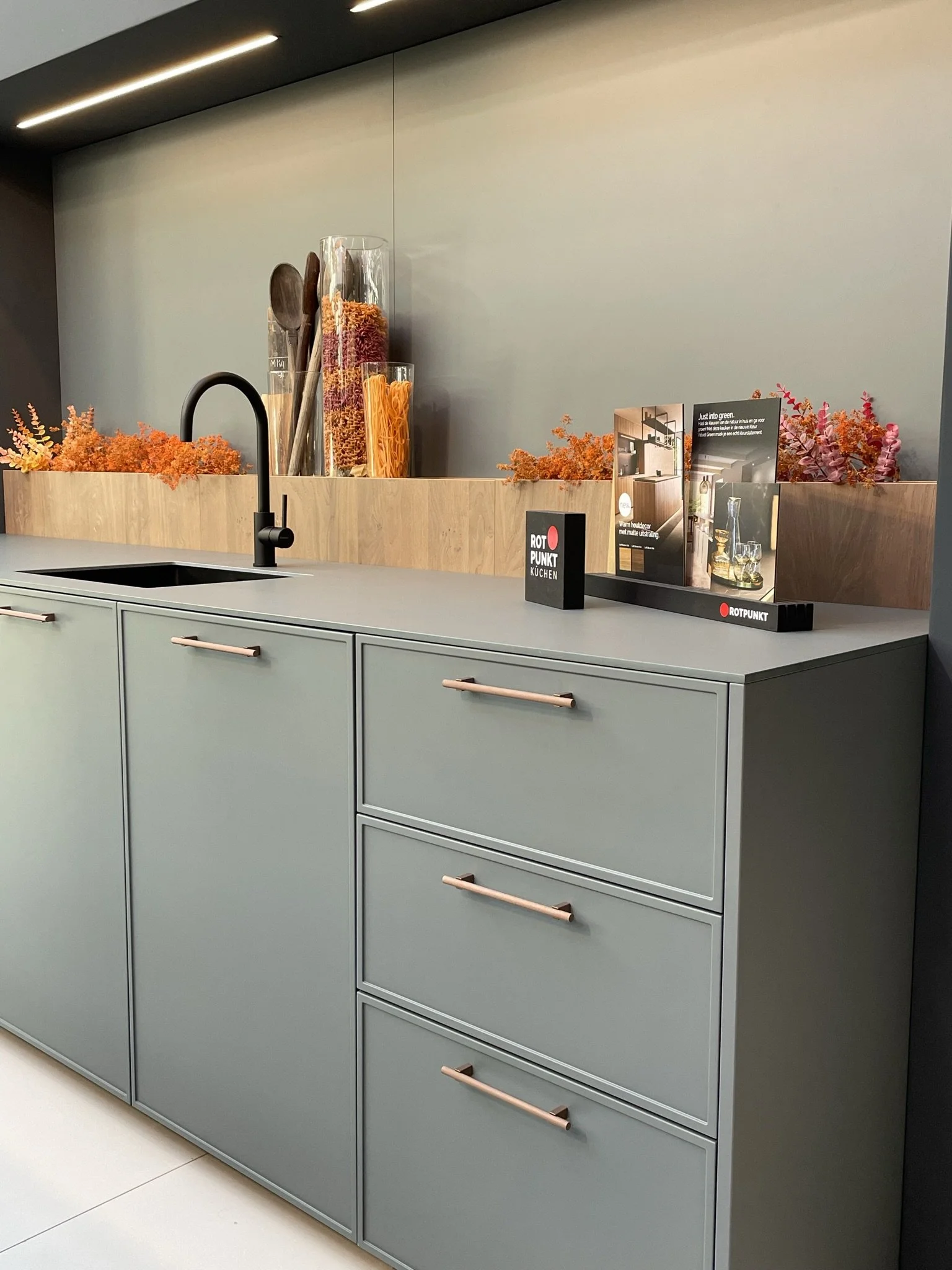
The Common Thread
Whichever direction a you take it in, the micro Shaker door works because it never fights the rest of the room. It's precise enough for a modern scheme, warm enough for country, and flexible enough to sit right in the middle for transitional. The real design decisions, the ones that actually determine whether a kitchen reads as country, modern or transitional, happen everywhere else: in the colour on the walls, the material underfoot, and how visible (or invisible) the appliances are allowed to be.
That's ultimately good news for anyone planning a kitchen around this door style. It means the cabinetry itself isn't the risk. The character of the room is built in the choices layered around it, which gives homeowners real freedom to evolve the look over time without having to start again from the units up.
Ready to explore the micro Shaker door in person? Book a consultation at our Cambridge showroom to see finishes and colours first hand.
Frequently Asked Questions
What is a micro of skinny Shaker door? A micro Shaker door keeps the recessed panel and in-frame construction of a traditional Shaker door but narrows the surrounding frame, often to somewhere between half an inch and an inch and a half, compared with the 2.5 to 3 inch frame of a standard Shaker. This gives it a lighter, more linear appearance while keeping the classic Shaker silhouette recognisable.
What's the difference between Shaker and micro Shaker kitchens? The core difference is proportion rather than shape. A standard Shaker door has a wider frame that reads as more traditional and furniture-like, while a micro Shaker door uses the same panelled design language with a narrower frame, giving it a cleaner, more contemporary feel that suits modern and transitional kitchens as easily as country ones.
Can a micro Shaker door work in a modern kitchen? Yes. Because the frame is narrow and the detailing restrained, a micro Shaker door reads as architectural rather than traditional when it's finished in a matt, tonal colour and paired with minimal-grout tiling, integrated appliances and simple hardware.